Science
Our approach
At Enemsa Pharma, we are building a new generation of neuroprotective therapies designed to restore cellular homeostasis through proteostasis modulation, mitophagy enhancement, mitochondrial protection and reduction of oxidative stress. Centered on Icerguastat, our platform supports both standalone and combination therapies aimed at delivering disease-modifying benefits across ALS, Parkinson’s disease, CMT and other neurodegenerative disorders.
We are advancing Icerguastat both as a standalone therapy and as a platform for combination therapies. Its differentiated mechanism and favorable clinical profile make it an attractive backbone for pairing with approved or late-stage agents targeting complementary disease pathways.
Our development strategy combines deep mechanistic understanding with rigorous translational research. We generate comprehensive, IND-ready data packages encompassing efficacy, target engagement, translational biomarkers, ADMET, drug-drug interaction assessments, and CMC development to accelerate clinical advancement and support partnering opportunities.
We build comprehensive, IND ready data packages – including in vitro and in vivo efficacy, pathway engagement, translational biomarkers, ADMET, DDI, and CMC – to demonstrate the broad therapeutic potential of our combinations.
This rigorous approach supports both internal clinical advancement and co‑development or partnership opportunities with pharmaceutical companies.
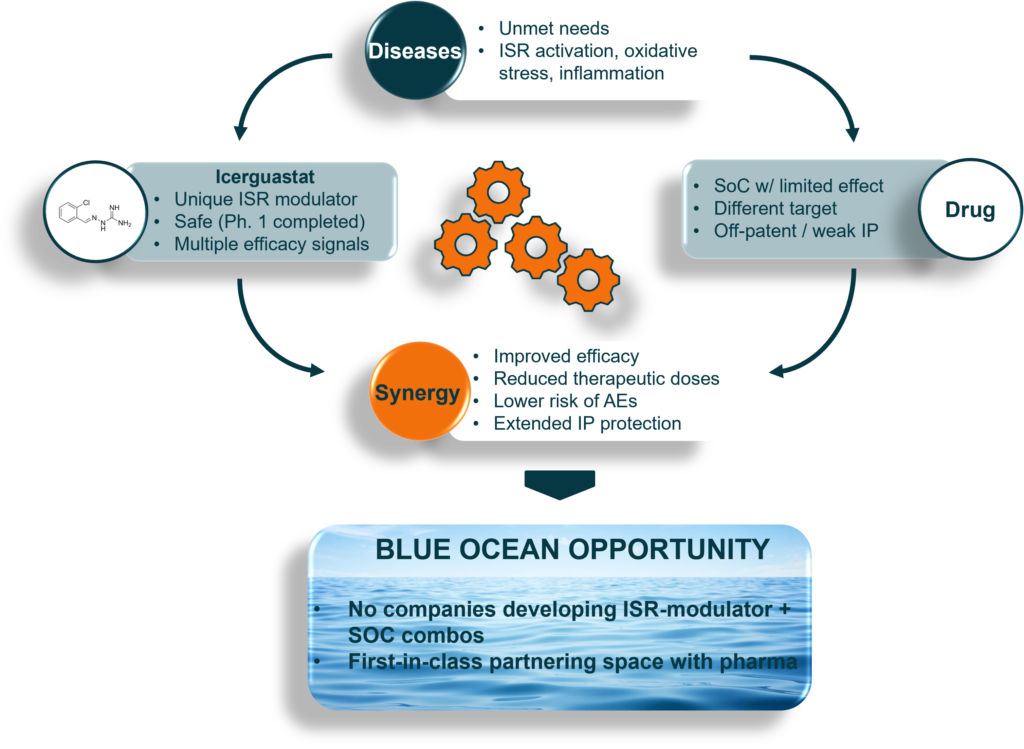
Among our combination programs, ENE-029, a combination of Icerguastat and Ambroxol, has demonstrated compelling preclinical synergy in models of neurodegenerative disease and is being advanced for Parkinson’s disease and other indications characterized by lysosomal and mitochondrial dysfunction. We are also evaluating additional combination strategies designed to maximize neuroprotection through complementary mechanisms of action.
In parallel, Icerguastat is being developed as a monotherapy in neurodegenerative and neuromuscular disorders, including ALS and Charcot-Marie-Tooth disease (CMT), where its ability to restore cellular homeostasis may provide meaningful disease-modifying benefits.
Ultimately, our mission is to deliver transformative therapies that not only alleviate symptoms but also slow, halt, or potentially reverse disease progression in patients facing serious neurological diseases with limited treatment options.
About Icerguastat
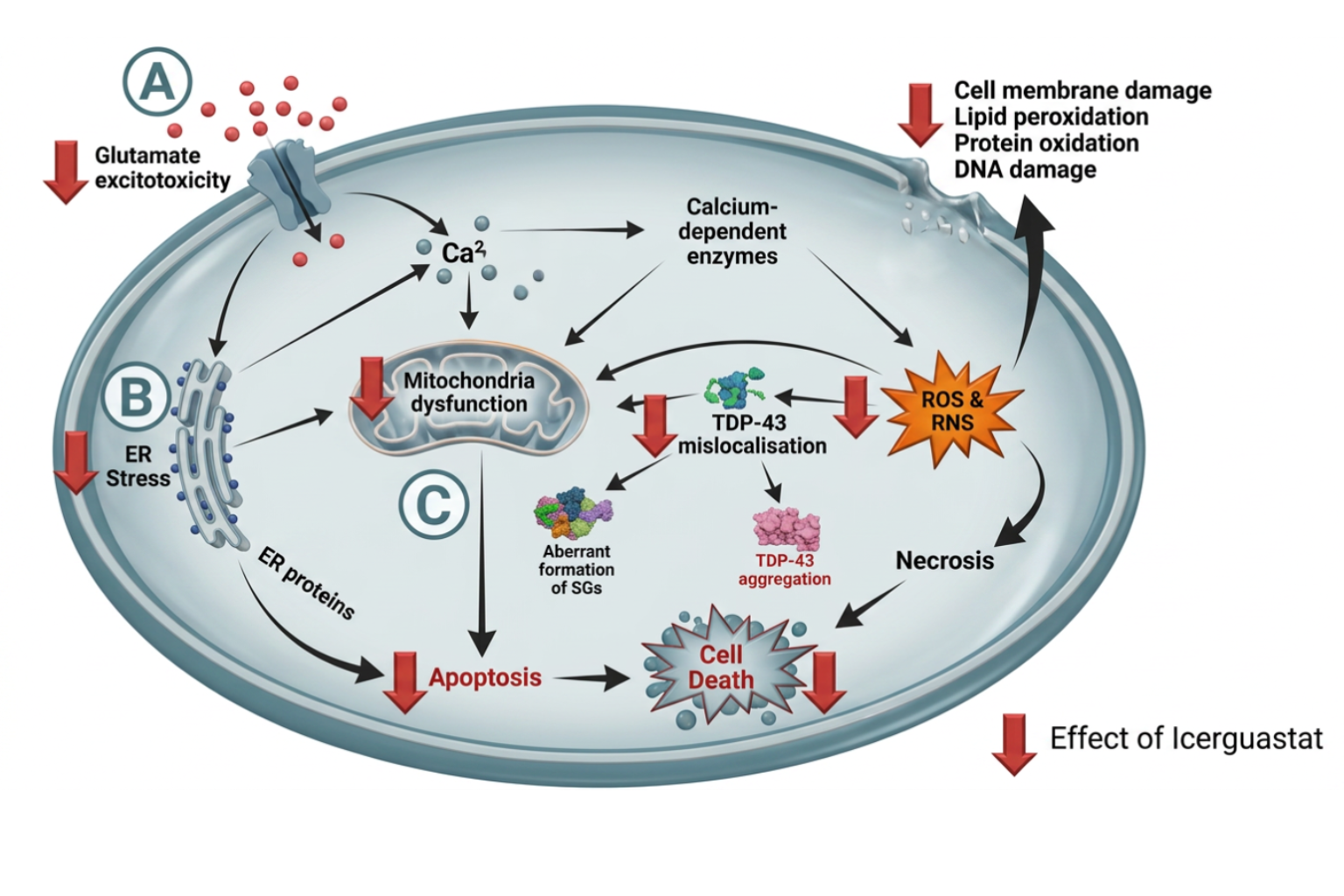
Icerguastat (also known as Sephin1 or IFB-088) is a first-in-class, orally available, brain-penetrant small molecule that combines multiple complementary neuroprotective mechanisms. The compound modulates NR2B-containing NMDA receptors (A), selectively prolongs adaptive Integrated Stress Response (ISR) signaling through inhibition of the PPP1R15A/PP1c phosphatase complex (B), and directly targets Prohibitin-2 (PHB2) to activate PINK1-Parkin-dependent mitophagy, enhancing mitochondrial quality control and reducing mitochondrial oxidative stress (C).
This multifunctional therapy addresses several key drivers of neurodegeneration, including proteostasis dysfunction, excitotoxicity, impaired mitophagy, mitochondrial dysfunction, oxidative stress, and neuronal vulnerability. Icerguastat has demonstrated efficacy in multiple preclinical models of neurodegenerative and neurological diseases, including Amyotrophic Lateral Sclerosis (ALS), Charcot-Marie-Tooth disease (CMT), Parkinson’s disease (PD), Alzheimer’s disease (AD), Multiple Sclerosis (MS), and Spastic Ataxia-5 (SPAX-5).
Icerguastat is a de-risked clinical-stage asset with a completed Phase 1 study demonstrating a favorable safety and tolerability profile, supported by an extensive non-clinical package including chronic toxicology studies and long-term ADMET data. An exploratory Phase 2 study in bulbar-onset ALS patients confirmed Icerguastat safety, target engagement, and encouraging biomarker and clinical effects.
Its unique multimodal mechanism positions Icerguastat both as a standalone disease-modifying therapy and as a backbone for synergistic combination approaches targeting neurodegenerative diseases.
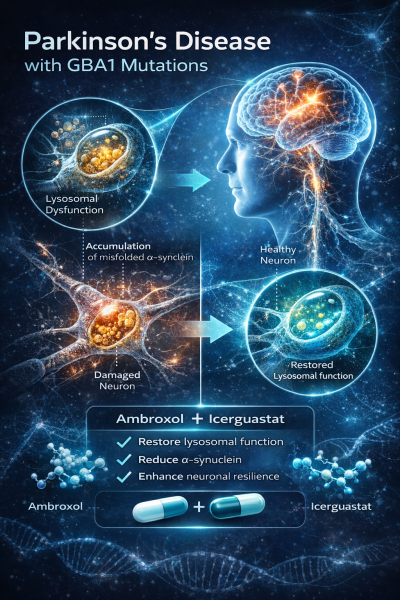
Parkinson’s Disease with GBA1 Mutations
Parkinson’s disease is a progressive neurodegenerative disorder of the central nervous system characterized primarily by motor symptoms such as tremor, rigidity, bradykinesia, and postural instability. It results from the gradual loss of dopamine‑producing neurons in the substantia nigra and often includes non‑motor symptoms like sleep disturbances, mood changes, and cognitive impairment. Symptoms typically develop gradually and worsen over time.
Parkinson’s disease associated with GBA1 mutations (GBA1‑PD) is the most common genetic form of Parkinson’s disease and is characterized by reduced glucocerebrosidase (GCase) activity, impaired lysosomal degradation, and accelerated accumulation of misfolded proteins such as α‑synuclein. These pathogenic mechanisms contribute to earlier onset and faster progression compared with idiopathic Parkinson’s disease. Despite the strong biological understanding of this disease pathway, no disease‑modifying therapy has yet been approved.
Ambroxol, a long‑established therapeutic molecule, has emerged as a promising candidate for disease modification in Parkinson’s disease. A Phase 2 clinical study in GBA1‑PD patients demonstrated increased GCase activity in the brain together with a reduction in α‑synuclein levels, providing strong biological proof of concept. Building on these encouraging results, two Phase 3 trials are currently ongoing to further evaluate ambroxol’s impact on disease progression in Parkinson’s disease.
To further enhance therapeutic impact, Enemsa Pharma is developing a combination strategy pairing Ambroxol with icerguastat. Compounds that prolong the phosphorylation of eIF2α, like Icerguastat, modulate the cellular stress response pathway, promote neuronal resilience, and reduce α synuclein-related toxicity as well.
When combined with Ambroxol’s ability to boost GCase activity and restore lysosomal function, Enemsa Pharma dual‑mechanism approach aims to correct the core biological defects of GBA1‑PD more effectively than either agent alone, with the ambition to deliver a first‑in‑class disease‑modifying therapy for these high‑risk patients.
Such a combination therapy targeting GCase-related pathway abnormalities could also slow disease progression in both idiopathic PD and Dementia with Lewy Body (DLB), because of the considerable overlap in pathobiology between GBA1-PD, idiopathic PD and DLB with GBA1 mutations.
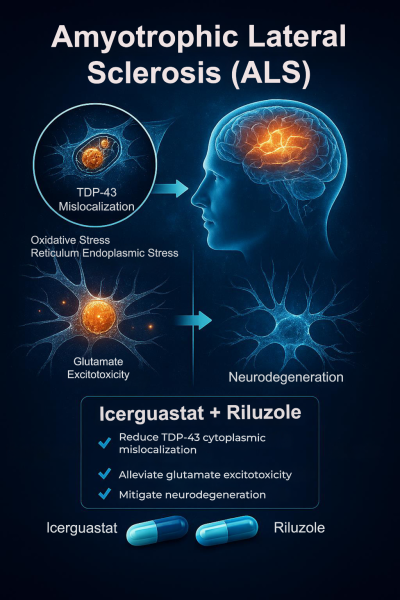
Amyotrophic Lateral Sclerosis (ALS)
Amyotrophic lateral sclerosis (ALS) is a severe and rapidly progressive neurodegenerative disease marked by the degeneration of upper and lower motor neurons, leading to muscle weakness, loss of motor function, and ultimately respiratory failure. Among its clinical presentations, bulbar‑onset ALS represents a distinct and particularly aggressive phenotype, accounting for roughly one‑third of cases and associated with faster progression and poorer survival outcomes. Despite decades of research, ALS remains an area of profound unmet medical need, with currently available therapies offering only limited impact on disease progression.
Icerguastat, which is a selective modulator of the integrated stress‑response pathway (ISR), works by prolonging the phosphorylation of eIF2α, allowing motor neurons to better withstand chronic proteotoxic and cellular stress. This mechanism is highly relevant in ALS, where dysregulated protein homeostasis and pathological aggregation – including TDP 43 pathology – play central roles in neurodegeneration. Preclinical studies in SOD1 and TDP‑43 models have demonstrated that Icerguastat supports motor neuron survival, improves motor performance, and modulates key disease‑related markers.
Riluzole, the long‑established standard of care in ALS, reduces glutamatergic excitotoxicity but provides only modest clinical benefit on its own.
Combining Riluzole with Icerguastat provides a complementary, dual‑mechanism therapeutic strategy for ALS. While Riluzole acts upstream to reduce glutamatergic excitotoxicity, Icerguastat enhances the resilience of stressed motor neurons by stabilizing eIF2α phosphorylation and modulating downstream stress‑response pathways.
Enemsa Pharma has shown that this combination delivers synergistic neuroprotective effects in vitro, preserving neuromuscular junction integrity in a co‑culture of primary rat motoneurons and myotubes exposed to glutamate.
Encouraging signals have also emerged clinically. In a randomized Phase 2a trial in bulbar‑onset ALS, the Icerguastat + Riluzole combination reduced cytoplasmic TDP‑43, the molecular hallmark of ALS; slowed the decline in respiratory function, a major determinant of patient survival; and demonstrated good safety and tolerability over six months of treatment.
Taken together, these findings provide compelling clinical evidence of biological target engagement and support the potential of icerguastat to deliver meaningful disease modifying benefit to ALS patients when combined with the current standard of care.